

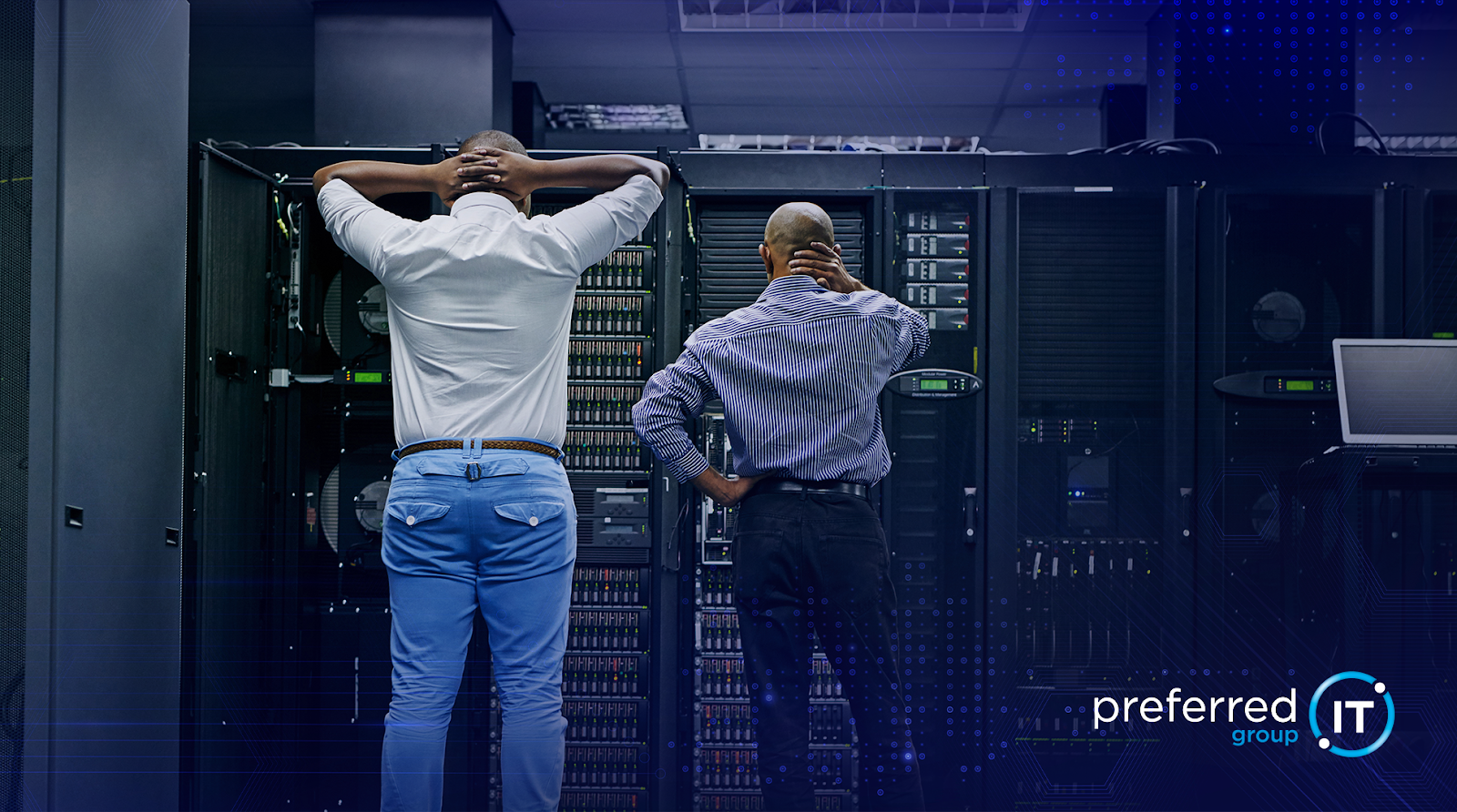
What happens to your business if the worst happens? Whether it’s a ransomware attack, a natural disaster, or a power outage, downtime can grind operations to a halt. For small and medium-sized businesses (SMBs), this isn’t just an inconvenience, it’s a potential catastrophe.
Business continuity and disaster recovery (BC/DR) planning ensures that your operations can survive disruptions and bounce back quickly. But without an in-house IT team or the right expertise, most SMBs struggle to build and maintain these critical systems. That’s where Managed IT Services step in, not just as a safety net, but as a strategic partner in resilience.
Let’s explore how Managed IT strengthens business continuity and turns disaster recovery from a scramble into a plan.
First, What’s the Difference Between Business Continuity and Disaster Recovery?
These terms are often used interchangeably, but they serve different purposes:
- Business Continuity is your overall plan for keeping operations running during and after an unexpected disruption. It’s about access, communication, and workflows.
- Disaster Recovery is a subset of that plan, focused specifically on restoring IT infrastructure, systems, and data after a crisis.
In short: Business continuity keeps you in business. Disaster recovery brings your systems back online.
Why Business Continuity Matters for SMBs
Many small businesses operate under the assumption that disaster “won’t happen to us.” But in reality:
- 45% of SMBs have experienced a cyberattack, according to Verizon’s Data Breach Investigations Report.
- 60% of small businesses fail within six months of a data loss event.
- Even minor events like local outages, hardware failure, or accidental deletion can cripple productivity for hours or days.
With no continuity plan, recovery is chaotic. Staff scramble to access files. Communication breaks down. Customers are left in the dark. The longer this lasts, the more trust and revenue you lose.
How Managed IT Supports Business Continuity
1. Data Backups That Actually Work
Too many businesses assume their backups are running until they need them and discover they’re outdated, incomplete, or corrupted.
Managed IT providers like Preferred IT Group implement automated, verified backups across local and cloud-based storage. More importantly, they routinely test restorations to ensure that backups are usable when disaster strikes.
This means fast and reliable recovery.
2. Rapid Recovery Systems
Downtime is measured in minutes, not hours. That’s why Managed IT providers deploy disaster recovery infrastructure that allows systems to be restored quickly, often within minutes to a few hours depending on severity.
Preferred IT Group works with clients to determine Recovery Time Objectives (RTOs) and Recovery Point Objectives (RPOs) tailored to each business’s tolerance for downtime and data loss. This ensures your recovery process fits your operational needs.
3. Redundancy Across Systems
Managed IT sets up redundant systems to eliminate single points of failure:
- Dual internet connections
- Offsite backups
- Redundant power supplies
- Failover servers
This architecture ensures that if one component fails, another takes over, which is keeping your business running.
4. Proactive Monitoring and Threat Detection
The best way to recover from a disaster is to avoid it in the first place. Managed IT Services include 24/7 monitoring to detect abnormal activity, whether it’s unusual server behavior, a suspicious login, or a rogue application running in the background.
Preferred IT Group’s real-time alerting allows them to act immediately, often resolving threats before they can trigger a full-scale outage or breach.
5. Cybersecurity Measures to Prevent Breaches
Many disasters start with human error or malware. A clicked phishing link or an unpatched system can bring an entire business to a halt. Managed IT includes robust cybersecurity strategies to reduce this risk:
- Antivirus and firewall management
- Endpoint protection
- Security awareness training for employees
- Regular vulnerability assessments
These safeguards drastically reduce the likelihood of a breach disrupting your business in the first place.
6. Communication Continuity
Disaster recovery isn’t just about systems, it’s about people. Managed IT can help set up cloud-based communication tools like VoIP, Microsoft Teams, or Google Workspace so teams can stay connected and keep working even from alternate locations or personal devices.
This is especially critical for service-based businesses like legal or consulting firms that rely heavily on remote collaboration and client communication.
7. Documented Recovery Playbooks
Every business needs a plan but not every business has one. Managed IT creates custom recovery playbooks that outline exactly what to do, who’s responsible, and how to execute each stage of a recovery process.
Preferred IT Group’s disaster recovery planning is personalized to the client’s size, industry, and risk profile. So when a disruption hits, there’s no panic, just process.
Why You Shouldn’t DIY Disaster Recovery
Some SMBs attempt to handle BC/DR internally, often through manual backups or off-the-shelf cloud tools. The problem? These systems rarely integrate well, and they leave gaps, especially around cybersecurity, data recovery, and system compatibility.
Without testing, documentation, or a response team, DIY recovery efforts are slow and unpredictable.
Managed IT brings consistency, testing, and accountability to the table, ensuring that recovery is fast, complete, and coordinated.
Industry-Specific Risk? Managed IT Adapts to It
- Healthcare: HIPAA compliance and patient data recovery are critical. Preferred IT Group builds compliant recovery strategies with encryption and access controls.
- Legal Firms: Case files and client data must be accessible even during disruptions. Managed IT ensures encrypted backups and recovery systems that maintain confidentiality.
- Manufacturing: Production delays cost thousands per hour. IT system restoration must be fast and include vendor coordination, something Managed IT providers handle seamlessly.
Your Business Is Resilient. Make Sure Your IT Is Too
Business continuity isn’t about eliminating risk entirely. It’s about ensuring that when disruptions occur, they don’t destroy your momentum, your reputation, or your bottom line.
With Managed IT, business continuity and disaster recovery become a strategic advantage, not an afterthought.
Preferred IT Group helps small businesses not only survive disruption but come back stronger, faster, and smarter than ever.
Ready to protect your business from the unexpected? Let’s build your disaster recovery plan, starting with a free consultation. https://preferreditgroup.com/make-an-appointment/